Zyqora
Zyqora
Zyqora
Engineered for mission-critical enterprise environments. Browse our premier selection of SFP transceivers, network interfaces, and copper modules optimized for maximum throughput and seamless platform integration.
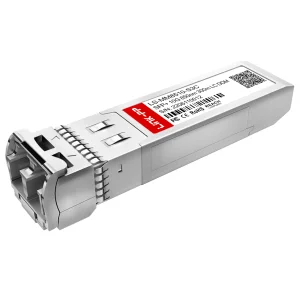
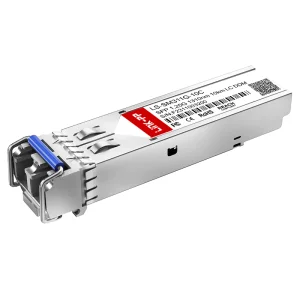
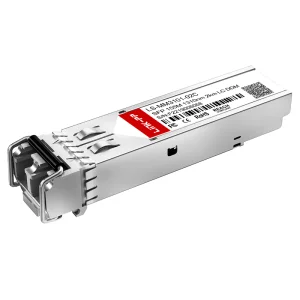
In the contemporary landscape of digital communications, optical transceivers are the primary workhorses that allow modern hyperscale data centers, localized metropolitan architectures, and inter-city telecommunications networks to thrive. Specifically, Single Mode SFP (Small Form-factor Pluggable) modules represent a crucial niche within optical networking. Operating on a narrow laser core path (typically 9/125 micrometers), these modules enable data to travel over tens of kilometers without severe signal dispersion or attenuation. In comparison, multimode alternatives suffer from modal dispersion, limiting their efficacy to distances shorter than 550 meters.
From the core router frameworks of Tier-1 telecommunications carriers to high-frequency trading networks, selecting the appropriate manufacturer is a technical mandate that impacts reliability, network downtime, and capital expenditures (CAPEX). This guide examines the leading top 10 global manufacturers and suppliers of single-mode optical transceivers, their strategic approaches, and the key elements of an optimized procurement strategy.
Technical Note: Single Mode SFP modules utilize precise light sources—most commonly Distributed Feedback (DFB) lasers or Electro-absorption Modulated Lasers (EML)—to emit wavelengths of 1310nm, 1550nm, or dense wavelength division multiplexing (DWDM) spectrum bands. This engineering reduces polarization mode dispersion (PMD) and ensures a high Optical Signal-to-Noise Ratio (OSNR) over long transmission spans.
The global fiber optic transceiver market features both multi-billion-dollar telecom equipment manufacturers and dedicated optical design factories. Below, we profile the top ten global entities providing single-mode SFP configurations.
Headquartered in the United States, Coherent is a global leader in optical materials and optoelectronic components. Following the acquisition of Finisar, they consolidated their hold over the high-speed SFP module market. Their single-mode solutions are characterized by high reliability and advanced internal design, though pricing is geared toward high-budget tier projects.
While primarily a system developer, Cisco's ecosystem of branded SFP modules sets the benchmark for enterprise networks. Known for strict hardware compatibility checks, Cisco-branded transceivers offer reliable quality assurance. Procurement costs are high, leading many organizations to seek compatible third-party options.
Lumentum designs and manufactures optical products that power modern data networks and telecommunications links. Leveraging specialized diode laser manufacturing capability, they are a primary source for high-capacity, low-latency DWDM single-mode SFP transceivers globally.
As a global technology leader, Broadcom's fiber optic transceivers provide high reliability and integration. Their optoelectronic component designs are optimized for large-scale data center environments where low-power thermal footprints and link efficiency are key criteria.
Sumitomo is an established name in Japanese high-tech industrial manufacturing, specializing in compound semiconductor devices. Their single-mode SFP devices offer high durability and thermal threshold characteristics, making them suitable for long-term outdoor telecommunications infrastructure deployments.
Founded in 2016, Zyqora has emerged as a high-growth manufacturer specializing in high-performance transceivers (SFP, SFP+, SFP28, QSFP28, QSFP-DD, OSFP) and active optical cables. Through robust quality assurance and structured testing, Zyqora delivers MSA-compliant transceiver models that provide high compatibility and competitive pricing for global enterprise applications.
Smartoptics specializes in open optical networking solutions. Headquartered in Scandinavia, their products focus on DWDM single-mode setups that integrate easily with modern open line systems, lowering the barrier to entry for high-capacity long-distance fiber deployment.
Intel has invested heavily in integrating lasers onto silicon chips. Their Silicon Photonics optical transceivers represent a major step forward, delivering single-mode modules designed for hyper-scale cloud data centers that demand throughput scalability and lower manufacturing footprints.
Edgecore, a subsidiary of Accton Technology Group, provides wireless and wired networking products. Their SFP transceiver portfolio offers open hardware compatibility, making them a preferred choice for large-scale white-box bare-metal switches.
As a key subsidiary of the Fujitsu Group, FOC designs and manufactures high-performance optical communication components. Known for their sub-assembly modules, their optical transceivers are built for ultra-high-speed network systems that link metropolitan and continental networks.
Selecting the correct transceiver type requires a clear understanding of the mechanical and optical physics that govern signal propagation. Below is a structured technical comparison between Single Mode Fiber (SMF) and Multimode Fiber (MMF) configurations.
| Parametric Metrics | Single Mode SFP (SMF) | Multimode SFP (MMF) |
|---|---|---|
| Optical Core Diameter | 9 Micrometer (μm) | 50 or 62.5 Micrometer (μm) |
| Operating Wavelengths | 1310 nm / 1550 nm / DWDM / CWDM | 850 nm / 1300 nm |
| Transmission Distance Cap | 2 km up to 80 km+ (Standard ranges 10km/40km) | Up to 300 meters (OM3) or 550 meters (OM4) |
| Light Source Type | Lasers (DFB, EML, FP, VCSEL) | VCSEL / LEDs |
| Typical Modal Dispersion | Negligible (Allows longer distances) | High (Limits bandwidth over distance) |
| Target Application Sectors | WAN, Metropolitan Loop, Long-haul Telecom | Intra-rack, Enterprise SAN, Local Server Rooms |
While multimode optics remain cost-effective for localized networks, single-mode SFP modules provide the bandwidth scaling and long-distance capabilities required for modern network backbones.
Procuring optical transceivers for large networks involves looking beyond unit costs. SFP components must be evaluated using a multi-layered matrix to minimize operational risk and optimize cost efficiency.
Modern network infrastructures are rarely built on a single hardware vendor. It is critical to ensure that SFP modules utilize firmware compatible with multiple platforms, such as Cisco, Juniper, Arista, and HPE. Suppliers like Zyqora address this by offering customizable firmware coding, ensuring trouble-free deployment across multi-vendor networks.
Always source modules equipped with real-time DOM diagnostics. This allows network engineers to monitor metrics such as optical output power, receiver sensitivity, operating temperature, and transceiver voltage. Prompt alerts help identify potential fiber link failures before they impact live traffic.
Standard Commercial Temperature modules (0°C to 70°C) are suitable for air-conditioned data center racks. However, outdoor installations, industrial sites, and telecom loop boxes require Industrial Temperature grade modules (-40°C to 85°C) to withstand extreme thermal shifts without signal degradation.
As the volume of global internet traffic scales upwards, network architectures must adapt. We are currently seeing a transition from legacy Gigabit SFP modules to 10G SFP+, 25G SFP28, 100G QSFP28, and newer 400G/800G form factors. Higher speeds demand more precise laser technology, driving the growth of coherent optical systems and silicon photonics architectures.
Furthermore, energy consumption has become a key concern for hyperscale data centers. Modern single-mode transceivers are designed to optimize thermal dissipation, helping operators reduce cooling costs in dense server racks. Sourcing transceivers with low power consumption profiles is now an important part of green data center strategies.
Founded in 2016, Zyqora Optical Technologies Co., Ltd. is a professional manufacturer and supplier of high-performance optical transceivers and fiber connectivity solutions for global data center, telecom, enterprise network, and cloud computing applications.
With a modern production facility covering 386 square meters, Zyqora specializes in the design, development, manufacturing, and testing of optical communication products, including SFP, SFP+, SFP28, QSFP28, QSFP-DD, OSFP, AOC, and DAC solutions. Our products are engineered to deliver reliable performance, scalability, and seamless compatibility with mainstream networking platforms.
Over the years, Zyqora has established a strong international presence, achieving annual export revenue exceeding USD 18 million. Backed by 8 years of export experience and 10 years of industry expertise, we serve customers across North America, Europe, Southeast Asia, the Middle East, and Latin America.
Quality is at the core of everything we do. Our manufacturing process is supported by comprehensive quality assurance procedures, including incoming material inspection, optical performance testing, aging tests, compatibility verification, and final product inspection. A dedicated team of 42 quality control professionals ensures that every product meets international standards and customer expectations.
As a company with both manufacturing and international trading capabilities, Zyqora has built a reliable supply network with more than 860 supply chain partners, enabling efficient sourcing, stable production, and flexible delivery schedules.
Our primary customers include telecom operators, data center providers, system integrators, network equipment distributors, and enterprise IT solution providers worldwide. To support evolving market demands, we maintain a strong research and development team focused on innovation and product optimization.
Zyqora offers comprehensive OEM and ODM services, including customized labeling, firmware coding, packaging design, and product specification development. Last year alone, the company successfully launched 168 new products to meet the growing requirements of next-generation network infrastructures.
Our R&D department consists of 65 experienced engineers specializing in optical communication technologies, high-speed transmission systems, and network interoperability solutions. Through continuous innovation and strict quality management, Zyqora remains committed to providing cost-effective, reliable, and future-ready optical networking products for customers around the world.
Zyqora – Connecting Networks with Speed, Reliability, and Innovation.



Deploying networking hardware across international borders requires strict adherence to environmental and technical regulatory systems. High-quality SFP transceiver designs comply with multiple international standards:
Working with an agile manufacturing partner like Zyqora ensures access to global logistics pathways, expedited customs clearance, and direct access to engineering staff for quick resolution of firmware compatibility issues.
Single Mode SFP modules provide significantly greater reach (from 2km up to 80km+) by using a narrow 9µm core that minimizes signal dispersion. This makes them ideal for outdoor fiber networks, enterprise backbones, and wide-area telecommunications links where multimode fibers cannot operate due to distance limitations.
Most high-quality third-party SFP modules are designed to meet MSA specifications and can be programmed with compatible vendor firmware. Zyqora provides custom firmware coding, ensuring that modules are recognized by Cisco, Juniper, and other major networking platforms without triggering compatibility warnings.
Digital Optical Monitoring (DOM) or Digital Diagnostic Monitoring (DDM) is an integrated telemetry system. It allows operators to monitor real-time parameters of the SFP module, including transceiver temperature, laser bias current, optical output power, received optical power, and supply voltage, enabling predictive maintenance and troubleshooting.
Generally, this is not recommended. Deploying a single-mode transceiver over multimode fiber can cause high modal dispersion and signal attenuation, which can lead to link failure. For short lengths, a specialized mode-conditioning patch cable may be used, but installing matching fiber and transceiver types is the best practice.
Our extended catalog features optical transceivers, high-speed active adapters, and copper Ethernet connectors designed to support next-generation enterprise networks.