Zyqora
Zyqora
Zyqora
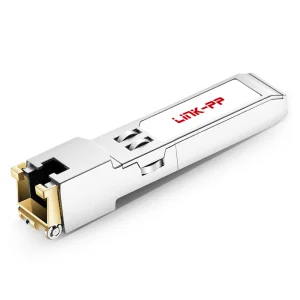
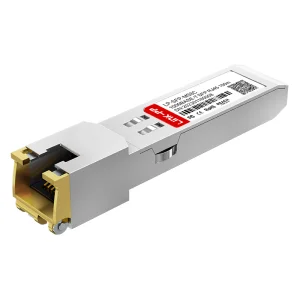
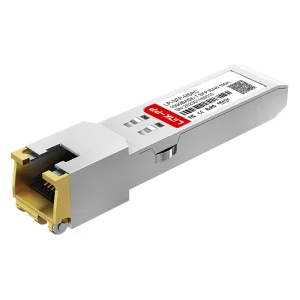
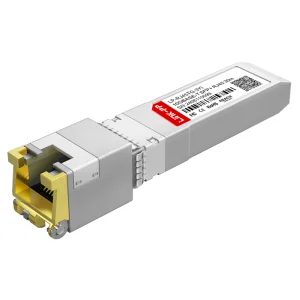
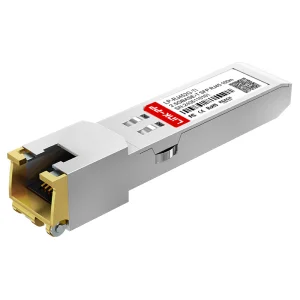
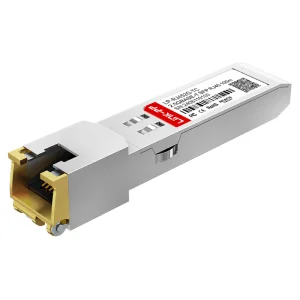
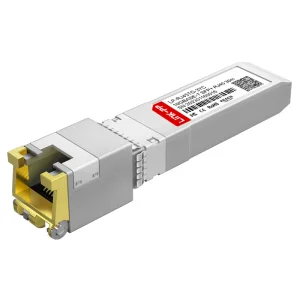
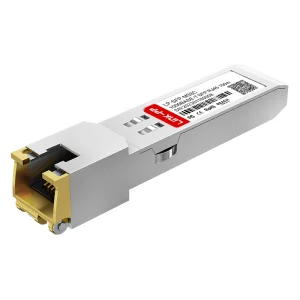
Explore our high-density, MSA-compliant RJ45 Copper SFP and SFP+ solutions designed for reliable data center connections up to 100 meters.
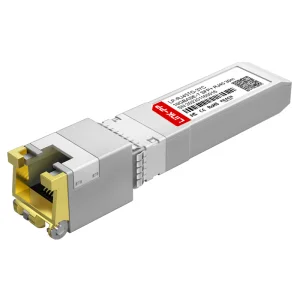
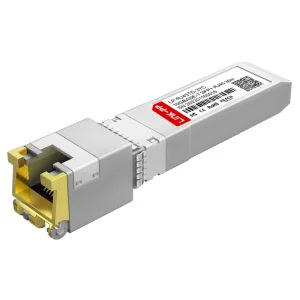
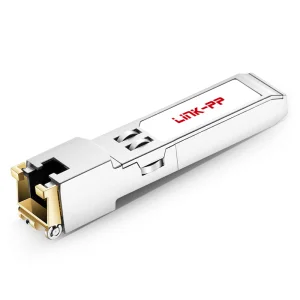
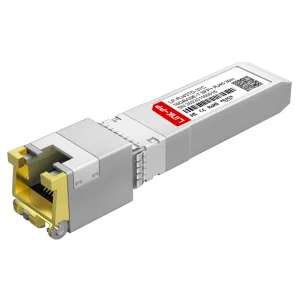
As cloud services and hyperscale operations scale up, procurement teams face a critical structural decision: optimizing high-speed connectivity over short distances. RJ45 Copper SFP modules (particularly 10GBASE-T SFP+) represent the standard solution for bridging legacy structured cabling systems with modern, high-speed fiber-optic cores.
Compared to optical modules, copper transceivers eliminate the need for expensive fiber patch panels and delicate fiber handling. By utilizing standard Category 6A or Category 8 UTP/STP cables, systems integrators can maintain legacy networks while seamlessly upgrading to 10Gbps speeds. This is crucial for environments where capital expenditure (CAPEX) must be balanced with strict operational metrics.
However, scaling copper transceivers requires addressing critical engineering parameters: power budget allocation, thermal dispersion, and interoperability validation. Procurement professionals are increasingly prioritizing suppliers that can demonstrate MSA compliance alongside low-power PHY (Physical Layer) architectures.
Leverage existing Cat6A copper infrastructures to bypass the high capital layouts of complete fiber overhauls.
Zyqora’s advanced PHY chips reduce power dissipation to 1.6W per port, preventing switch overheating.
Uncompromising performance benchmarks for high-density physical layer transmission systems.
A high-performance RJ45 copper SFP contains a sophisticated integrated circuit known as the Physical Layer Transceiver (PHY). This chip converts parallel digital lines from the host interface (such as SGMII or 10GBASE-R) into multi-level pulse amplitude modulated (PAM) signals capable of traversing standard twisted-pair copper cables. At 10G speeds, the transceiver utilizes PAM16 modulation coupled with advanced DSP features (Digital Signal Processing) like echo cancellation, feed-forward equalization (FFE), and decision feedback equalization (DFE) to manage high levels of crosstalk and attenuation.
| Module Standard | Host Port Type | PHY Core Voltage | Max Transmission Distance | Typical Power Consumption | Cabling Requirement |
|---|---|---|---|---|---|
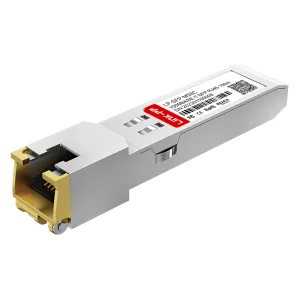
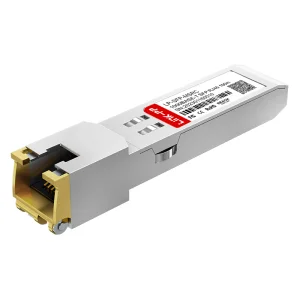
| 1000BASE-T SFP | SFP (1.25 Gbps) | 3.3 V | 100 meters | < 1.0 W | Category 5e / Category 6 UTP |
| 2.5GBASE-T SFP | SFP+ / Multi-Rate | 3.3 V | 100 meters | < 1.2 W | Category 6 / Category 6A UTP |
| 10GBASE-T SFP+ (30m) | SFP+ (10.3125 Gbps) | 3.3 V | 30 meters | ~ 1.6 W | Category 6A / Category 7 STP |
| 10GBASE-T SFP+ (80m/100m) | SFP+ (10.3125 Gbps) | 3.3 V | 80 - 100 meters | 2.0 W - 2.5 W | Category 6A / Cat8 Shielded |
*Note: For 80m and 100m 10GBASE-T deployments, utilizing high-quality Category 6A shielded twisted-pair (STP) cabling or Category 8 cabling is mandatory to avoid electromagnetic interference and ensure signal integrity.
Enterprise network designs optimized for performance, scalability, and strict thermal envelopes.
Directly link high-density edge switches to compute servers. Using 10GBASE-T RJ45 copper transceivers within the rack reduces deployment costs while maintaining the low-latency parameters required for server clustering.
Upgrade campus access points, NAS devices, and high-performance workstations to 2.5G and 5G rates. Avoid rewriting internal cable paths by running existing Cat5e/Cat6 infrastructure with auto-negotiation transceivers.
In harsh electromagnetic environments, use industrial-grade (-40°C to +85°C) copper SFP modules to bridge field instrumentation with optical fiber switchbacks, ensuring robust shielding and steady bit rates.
Founded in 2016, Zyqora Optical Technologies Co., Ltd. has grown to become a recognized manufacturer and global exporter of high-precision optical transceivers and active optical connection components. Spanning a modern production footprint and featuring cutting-edge cleanroom testing facilities, we cover the design, firmware coding, performance validation, and mass manufacture of SFP, SFP+, SFP28, QSFP28, QSFP-DD, OSFP, AOC, and DAC solutions.
Our manufacturing core relies on an extensive network of over 860 supply chain partners. This vertical integration allows Zyqora to offer reliable, cost-controlled procurement paths, short lead times, and comprehensive OEM/ODM custom services—including custom EEPROM microcode configuration for target switch environments.
By strictly adhering to global compliance frameworks, Zyqora ensures that every copper transceiver is designed to support high-density network layouts without sacrificing signal-to-noise margins.
Adapting copper interconnect technology for next-generation multi-gigabit throughput demands.
As 10G links reach capacity, standard committees are standardizing 25GBASE-T. This transition uses Category 8 cables to achieve high frequencies (up to 2 GHz), keeping the RJ45 interface relevant for short-run connections.
Future silicon revisions aim to bring 10GBASE-T power consumption below 1.2W. Advanced CMOS technology nodes (e.g., 7nm/5nm) allow PHY chips to process signals more efficiently, minimizing heat output in dense switch configurations.
Modern access networks require multi-rate transceivers (10G/5G/2.5G/1000M/100M). Next-gen transceivers will automatically adapt transmission rates based on wire condition to guarantee continuous, error-free uptime.
We implement a strict four-stage quality control process to guarantee long-term stability and reliable data transfers:
We maintain an active network of over 860 supply partners, providing the raw material redundancy needed to secure lead times, even during industry-wide component shortages.
Zyqora’s entire product line is compliant with international market requirements, conforming to RoHS, CE, and FCC standards to support seamless integration into enterprise networks worldwide.
Our R&D team regularly updates our firmware database, ensuring our transceivers maintain compatibility with new network software updates from major switch vendors.
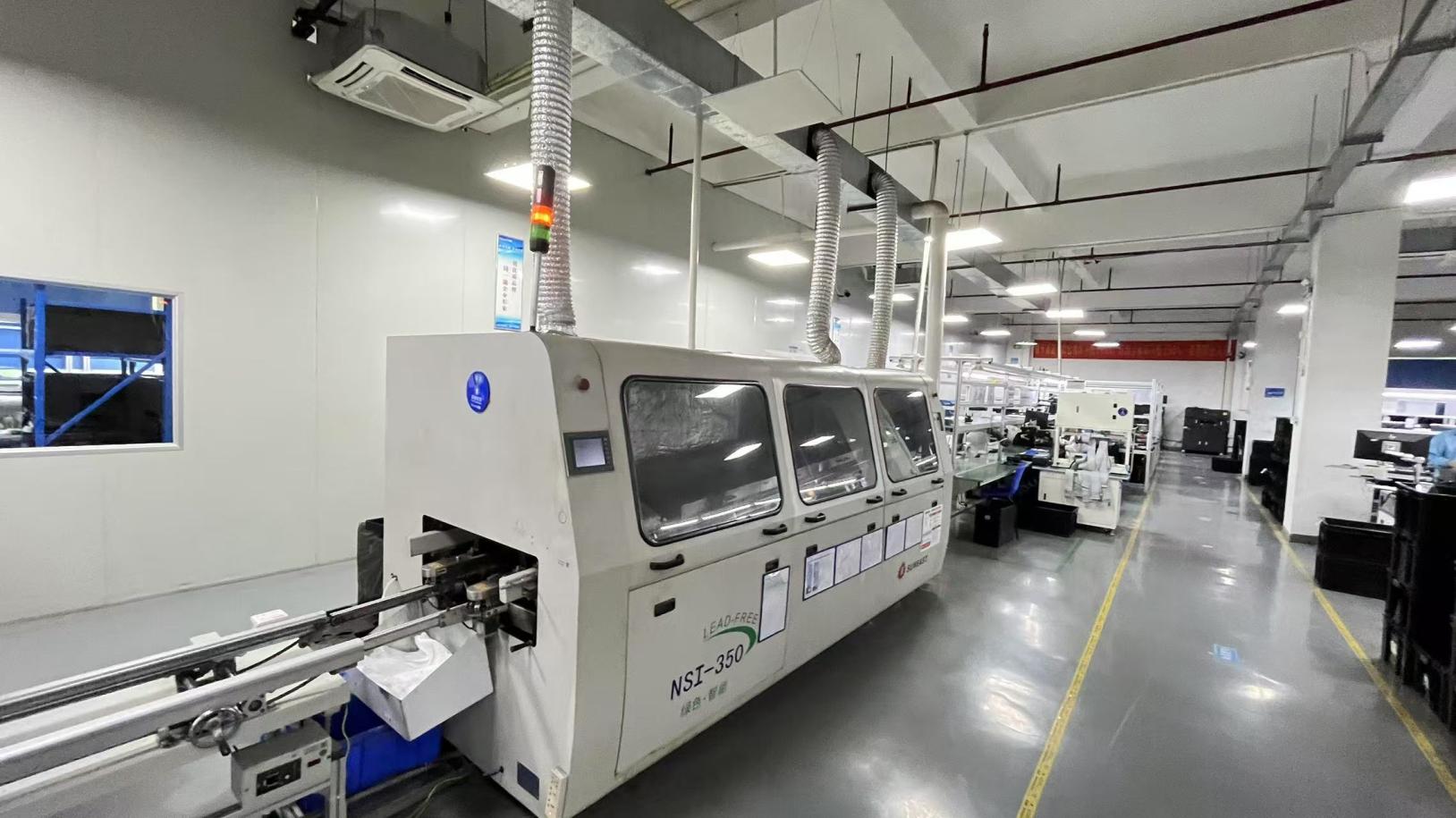
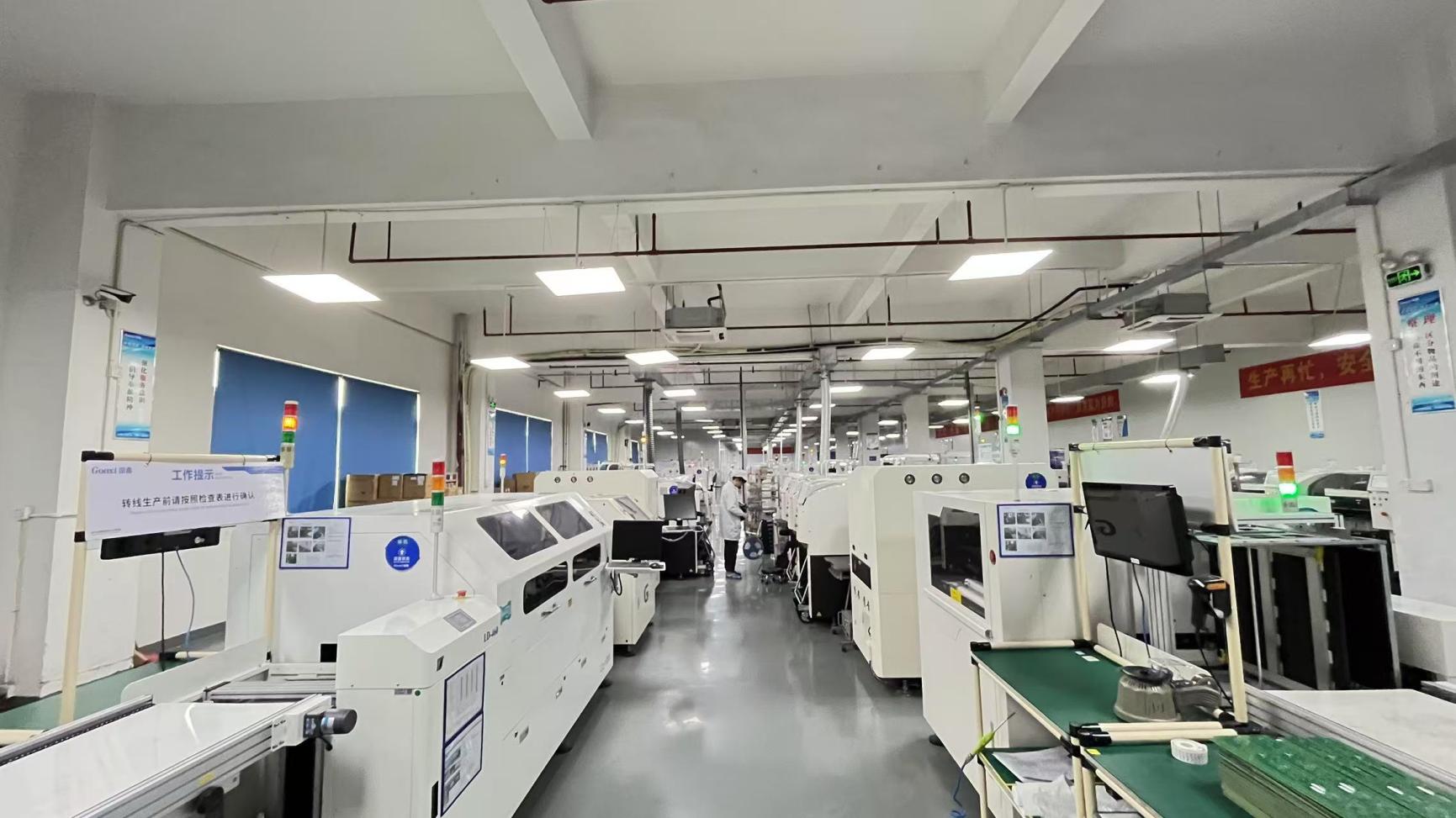
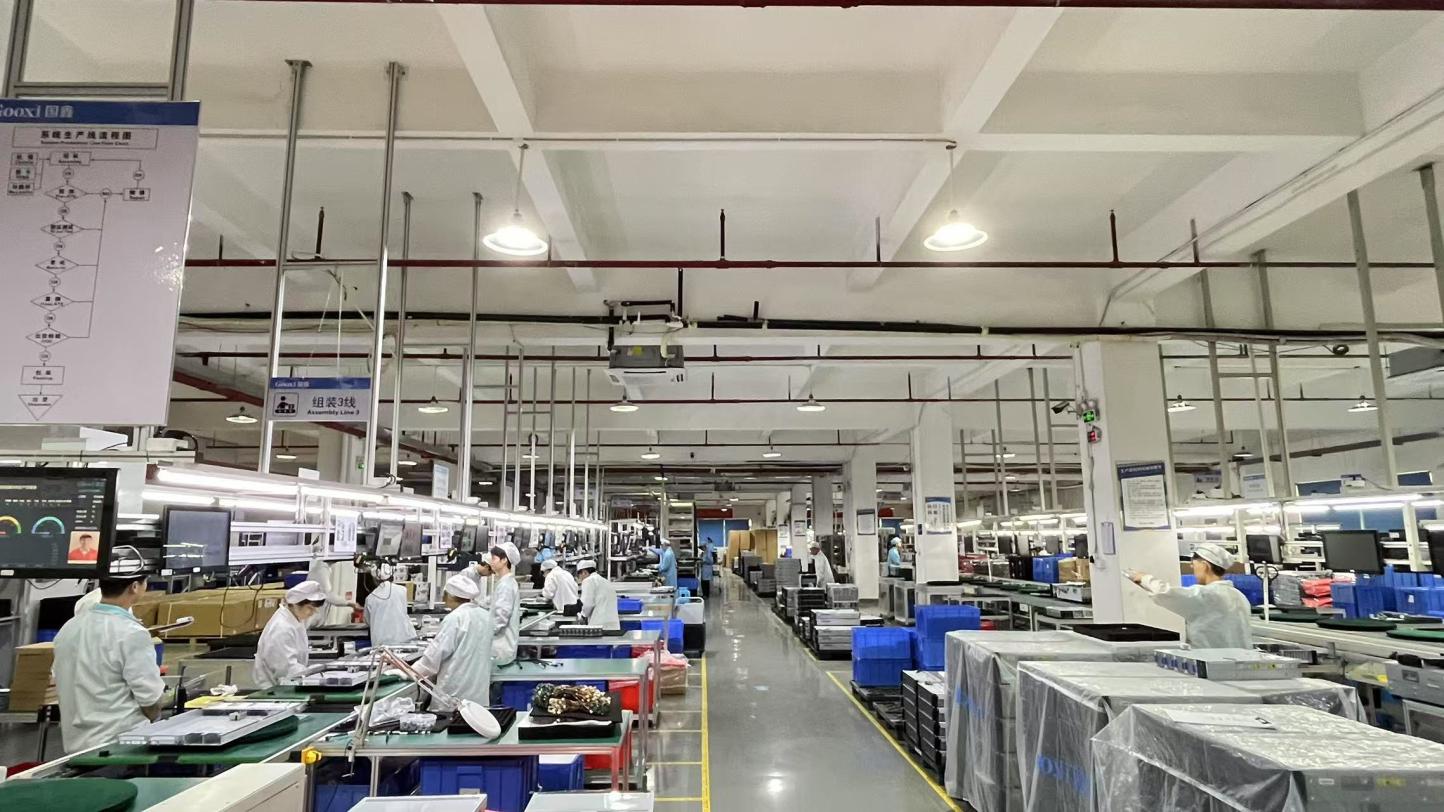
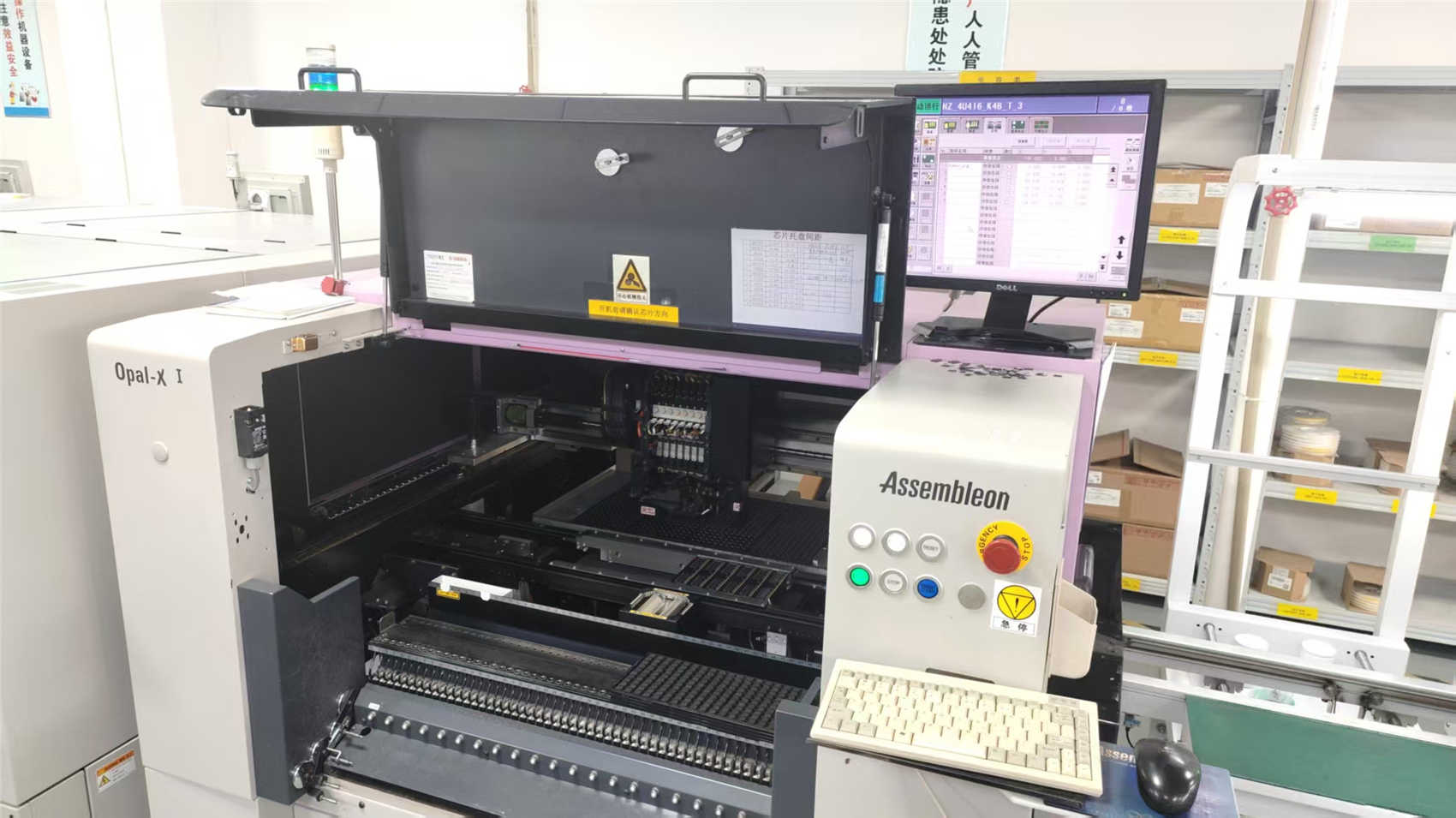
Tour Zyqora’s advanced production floor, compatibility testing benches, and cleanroom facilities.
Find technical answers about deployment limits, compatibility, thermal control, and design customization.
10GBASE-T modules contain an onboard PHY chip that runs complex DSP algorithms for echo cancellation and line equalization to transmit high-frequency signals over copper wires. This processing draws more power (typically 1.6W to 2.5W) compared to optical modules (under 1W), resulting in higher thermal output. Spacing out your copper modules across switch ports can help improve airflow and cooling.
No, standard 1G SFP slots cannot supply the power or bandwidth required by 10G transceivers. 10GBASE-T SFP+ modules require an SFP+ slot. However, multi-rate SFP+ modules can auto-negotiate down to 1G speeds when inserted into a 10G SFP+ port connected to a legacy 1G switch.
Standard low-power 10GBASE-T SFP+ copper transceivers support distances up to 30 meters over Category 6A or Category 7 cabling. For longer runs, Zyqora provides high-performance, extended-reach models that support distances of 80m and up to 100m over shielded Category 6A/8 cabling. These extended-reach models draw slightly more power to maintain signal integrity.
Our engineers read each switch's vendor-specific EEPROM configuration and write custom compatibility code to the transceiver’s microcontroller. We test each batch on original Cisco, HPE Aruba, Ubiquiti, and Juniper switches to verify that DOM (Digital Optical Monitoring) parameters and serial IDs register correctly without system errors.
SGMII (Serial Gigabit Media Independent Interface) is an internal switch interface that includes additional clocking and speed negotiation signals, allowing ports to scale between 10/100/1000Mbps speeds. 1000BASE-X is a dedicated physical link layer protocol running at a fixed 1.25 Gbps. Zyqora offers dedicated SGMII copper SFPs to support multi-rate Ethernet applications.
Select from our multi-rate, industrial temperature, and vendor-compatible RJ45 transceivers for customized network designs.