Zyqora
Zyqora
Zyqora
High-performance components engineered for robust signal integrity and standard compliance.
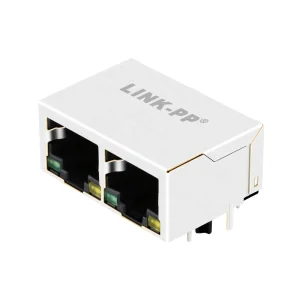
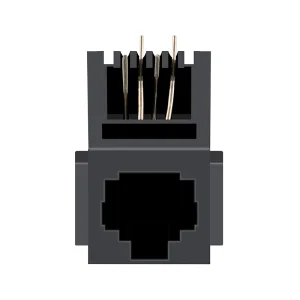
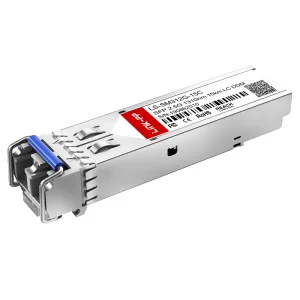
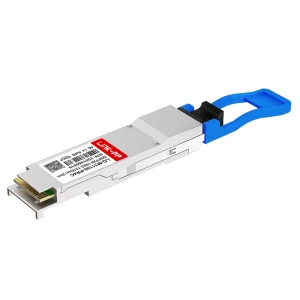
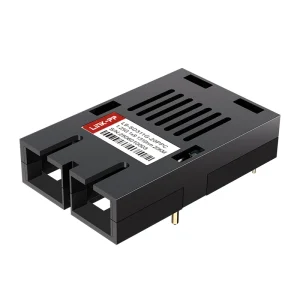
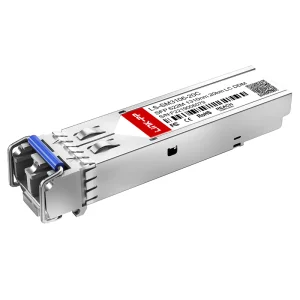
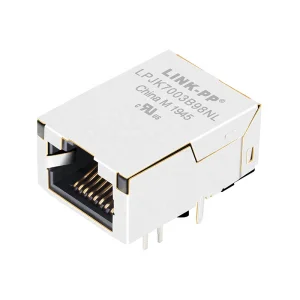
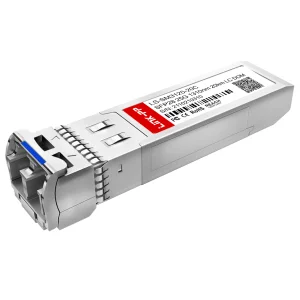
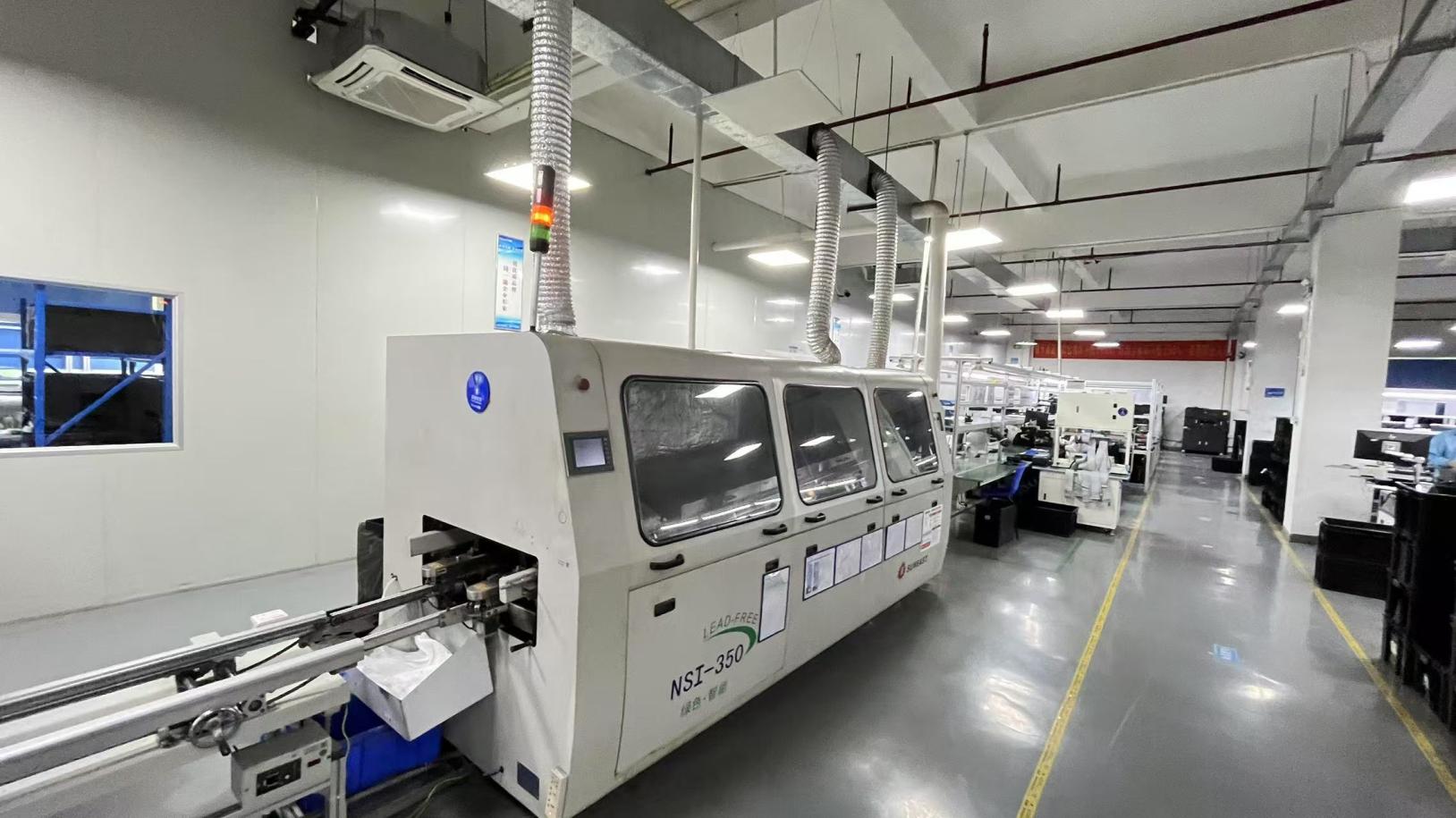
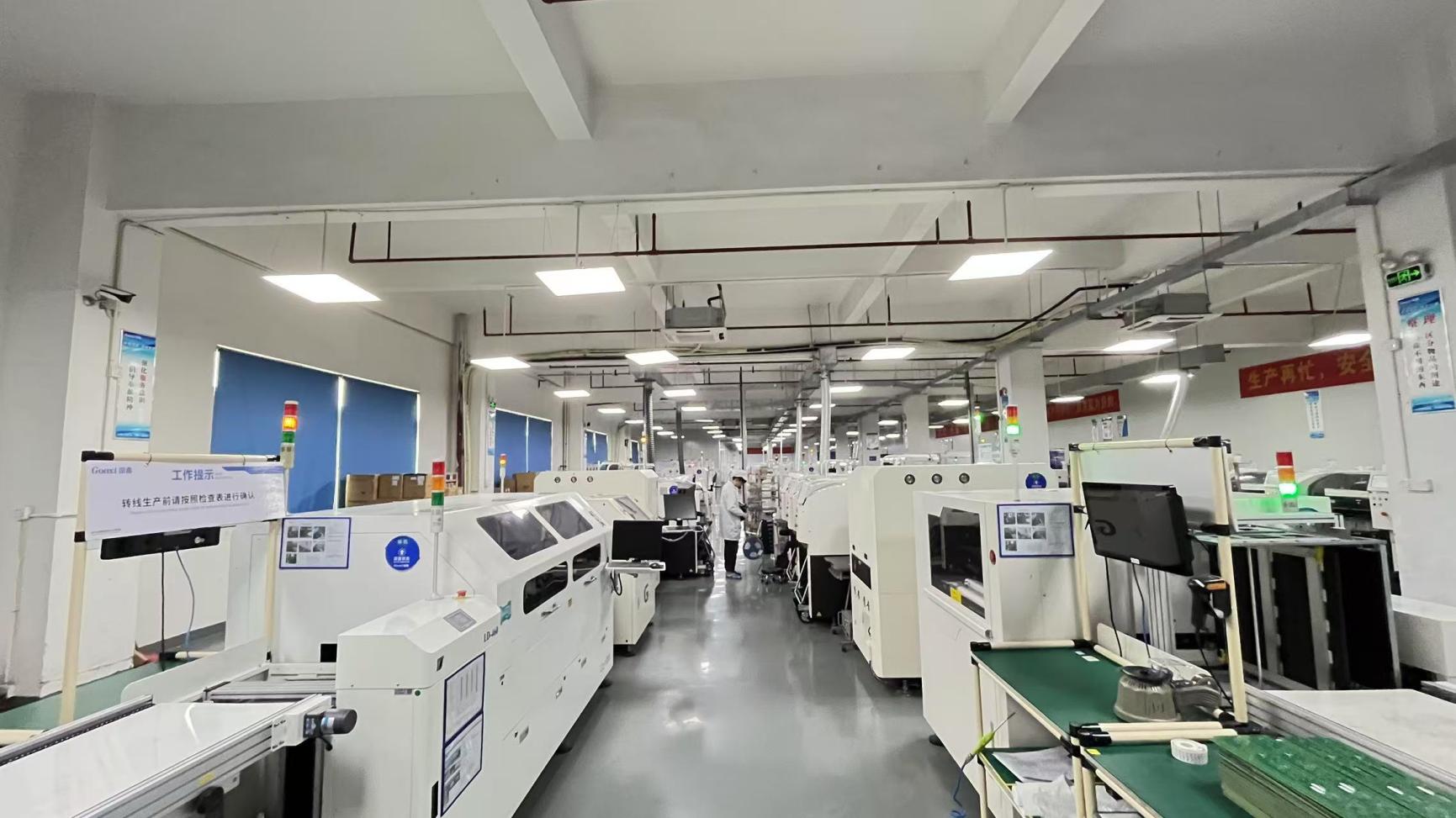
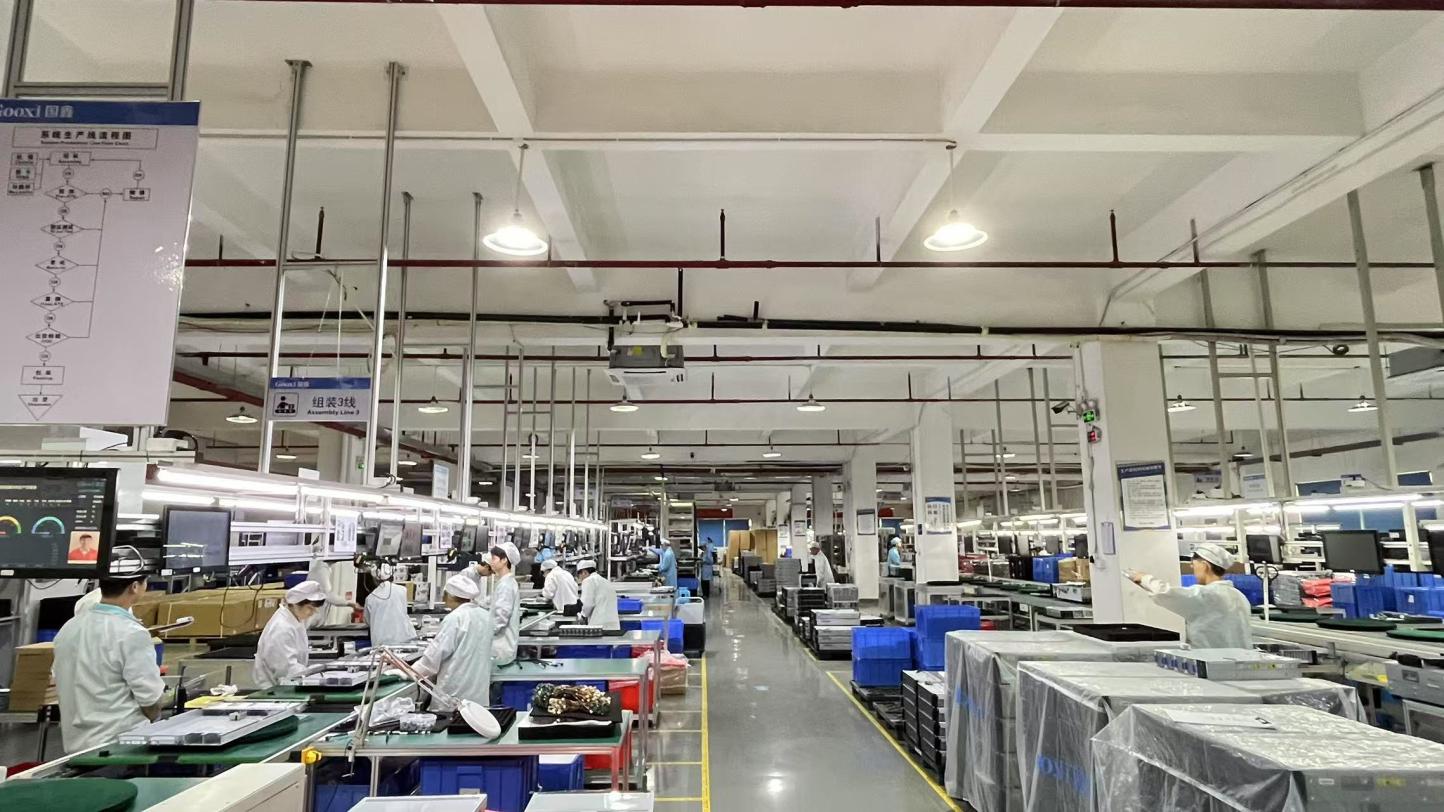
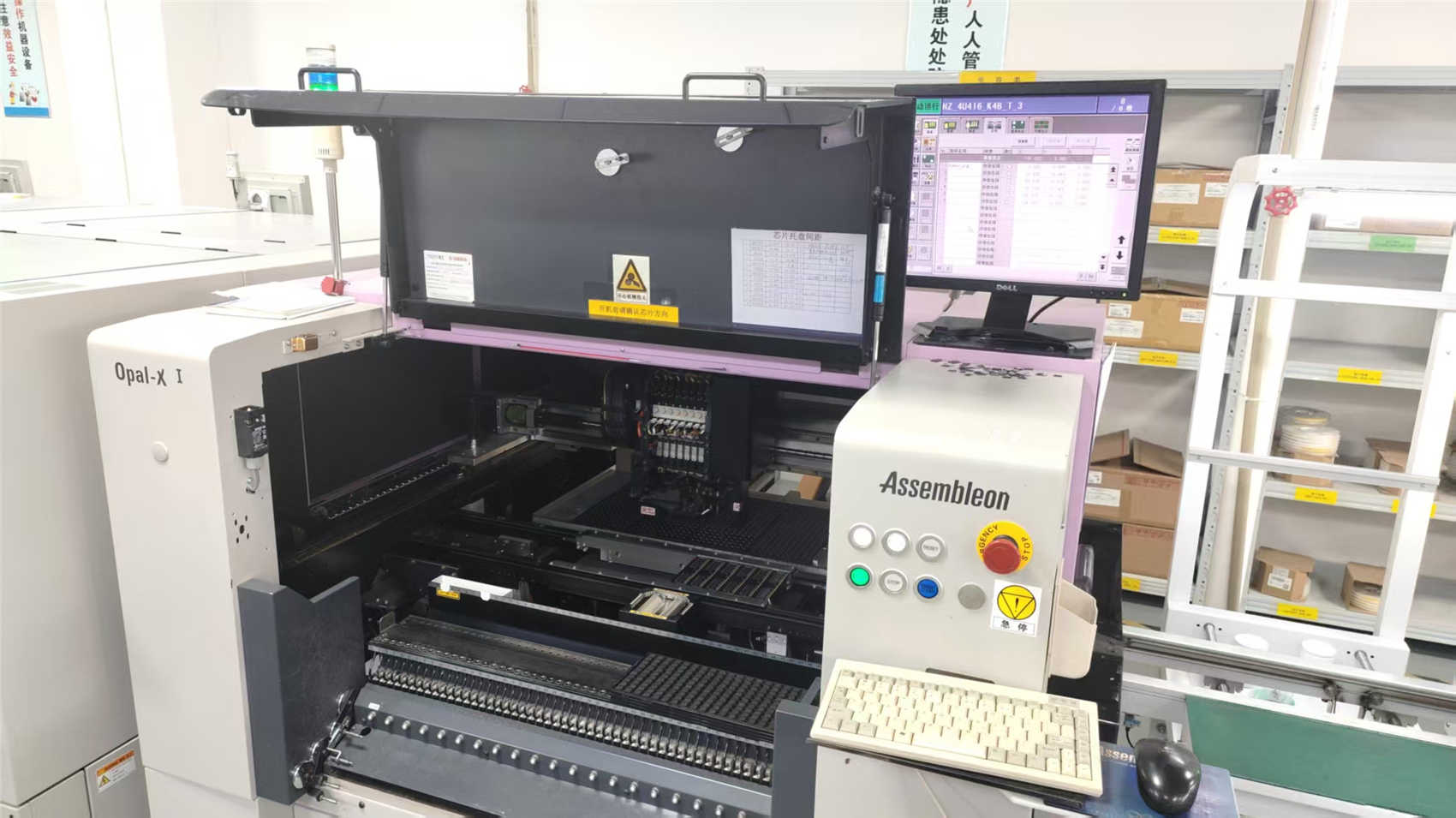
Founded in 2016, Zyqora Optical Technologies Co., Ltd. has evolved into a premier manufacturer and global exporter of high-density SFP cages, optical transceivers, and advanced copper/fiber connectivity components. Operating a state-of-the-art production cleanroom and prototyping facility covering 386 square meters, we integrate specialized mechanical engineering and strict electro-magnetic compatibility (EMC) design protocols to service telecom operators, hyperscale data centers, and industrial IoT integrators worldwide.
Our comprehensive portfolio spans SFP, SFP+, SFP28, QSFP28, QSFP-DD, OSFP, AOC, and DAC connectivity configurations. Through persistent research and deep industry knowledge, Zyqora delivers robust physical layer connectivity that forms the backbone of modern networks, ensuring long-term thermal viability, reliable grounding, and minimum insertion loss.
With an international network including over 860 supply partners, Zyqora sustains a highly resilient supply chain. Our dedicated workforce includes 42 quality assurance professionals and 65 R&D engineers, driving continuous design enhancement. Last year alone, Zyqora successfully rolled out 168 new product variations designed to accommodate the evolving demands of next-generation infrastructure, generating an annual export revenue exceeding USD 18 million across North America, Europe, the Middle East, Southeast Asia, and Latin America.
Modern telecommunication structures are under immense pressure to deliver higher bandwidth, lower latency, and continuous uptime. At the physical layer, the transition from legacy 10G SFP+ links to 25G SFP28, 100G QSFP28, and ultra-high-density 400G/800G optical interfaces has highlighted the critical role of SFP cages. No longer treated as simple sheet-metal guide brackets, modern transceiver cages serve as vital interfaces managing Signal Integrity (SI), Electromagnetic Interference (EMI) shielding, and Thermal Energy Dissipation.
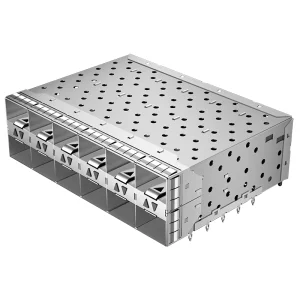
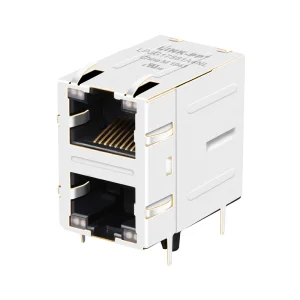
Global digitization—propelled by machine learning clusters, localized edge computing, and 5G Open RAN architectures—demands components that can withstand extreme environmental conditions while maintaining structural integrity. From standard ganged 1x4 configurations to high-density stacked 2x6 arrays, SFP cages must protect active transceivers while ensuring clean electrical connection to host system PCBs.
SFP cages must balance mechanical resilience with electrical performance. Choosing between press-fit compliant-pin designs and surface mount technology (SMT) is critical for system reliability. Zyqora SFP components are designed to meet these challenges through specific engineering choices:
Thermal management is particularly critical as data center environments become more dense. Zyqora's SFP cages support customizable heatsinks (fin heights ranging from 5mm to 13.5mm) with direct mounting clips. This keeps optical modules within safe operating limits, preventing wavelength drift and protecting expensive laser diodes.
Zyqora leverages precision production and rigorous quality assurance to meet international standards.
Our dedicated team of 42 QC professionals conducts comprehensive incoming material inspections, dimensional verifying, automated optical inspection (AOI), insertion force tests, and compatibility verification.
We provide customized packaging, labeling, custom light pipe configurations, and bespoke firmware tuning. Last year, our 65 R&D engineers successfully launched 168 new customized products.
Backed by 8 years of export experience and 10 years of technical expertise, we export over $18 million in high-speed connectivity solutions to system integrators and telecom networks across the globe.
Navigating global regulatory frameworks is critical for OEMs and hardware design engineers. Interconnect components must meet environmental and safety standards to avoid project delays or recalls. Zyqora ensures full compliance across all key standards:
To help clients pass system-level EMI compliance testing, Zyqora provides localized engineering support. Our engineers collaborate directly with customers' hardware teams, providing CAD models, PCB layout recommendations, and simulation data to streamline the design process.
Zyqora SFP cages are built for diverse industrial environments and mechanical challenges:
Industrial IoT & Edge Computing: In smart factories and outdoor telecom enclosures, components face vibration, temperature swings, and humidity. Our press-fit cages use robust mechanical anchors to resist vibration, maintaining a reliable connection to the PCB. In addition, chemical-resistant nickel plating prevents oxidation in harsh, humid environments.
Hyperscale Cloud Data Centers: In dense compute clusters, airflow is crucial. Our stacked 2xN SFP28 and QSFP28 cages are designed with low-profile walls and back-panel venting to maximize airflow. This design allows fans to draw heat away from optical transceivers, preventing thermal throttling and maintaining signal reliability.
Substation Automation & Smart Grids: Power infrastructure is subject to electromagnetic fields from high-voltage lines. Zyqora's SFP cages feature 360-degree shielding to block external electrical noise, ensuring reliable and error-free data transmission in sensitive grid networks.
As the optical communications industry adopts 112G and 224G PAM4 signaling, physical layer components must meet even tighter performance standards. The margin for signal loss, impedance mismatches, and noise is shrinking. Zyqora is actively preparing for these shifts with targeted engineering designs:
By investing in advanced testing equipment and high-frequency simulation tools, Zyqora ensures our customers have access to reliable components that support next-generation network upgrades.
Technical answers regarding compatibility, mounting, EMI performance, and customization.
Press-fit cages feature compliant pins (e.g., eye-of-the-needle design) that establish a highly reliable gas-tight electrical connection with the plated through-holes (PTH) of the host PCB via purely mechanical force. This eliminates the thermal stress and risk of solder bridging associated with wave soldering, making assembly cleaner and rework significantly easier. Solder-mount SFP cages, conversely, are typically preferred for lower-cost, lower-layer-count PCBs where the manual assembly equipment for press-fitting is unavailable.
Zyqora SFP cages utilize dual-shielding strategies to suppress electromagnetic interference. The front bezel interface is fitted with specialized copper-nickel-zinc alloy or stainless-steel spring fingers that maintain a multi-point conductive contact with the panel cutout. This creates a low-impedance grounding pathway that effectively seals high-frequency radiation. Additionally, our cages feature interlocking mechanical tabs along the seams to minimize gaps where electromagnetic leakage could occur.
Yes. All Zyqora SFP, SFP+, SFP28, and QSFP28 cages conform strictly to the Multi-Source Agreements (MSAs) governing SFP physical dimensions and host board footprints (such as SFF-8432 and SFF-8433). This ensures our products are fully compatible, drop-in replacements for standard industry offerings, allowing customers to dual-source components without redesigning their PCBs.
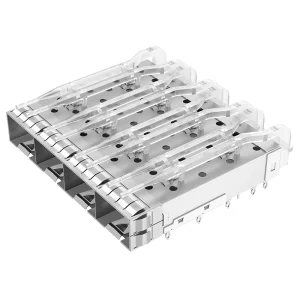
Absolutely. Through our active OEM/ODM program, we offer customization for LED light pipe channels (single, double, or multi-port routing) and heatsink profiles. Depending on your system's airflow direction and thermal requirements, we can supply pin-fin, straight-fin, or cross-cut heatsinks in various heights, along with custom mounting clips to match your chassis layout.
All our production batches undergo strict testing protocols. These include mechanical durability checks (verifying performance up to 250 mating cycles), contact resistance tracking, salt spray testing for corrosion resistance, and thermal shock cycles ranging from -40°C to +85°C. These tests verify the electrical and mechanical stability of our cages over their expected service life.
High-speed copper modules, compatible cages, and stacked interface modules designed for global deployment.