Zyqora
Zyqora
Zyqora
High-speed, low-latency connector interfaces optimized for the Paris FLAP-D data center infrastructure networks.
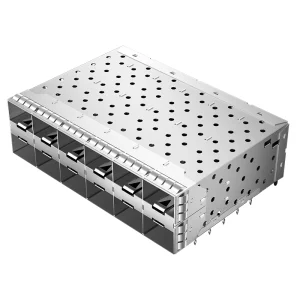
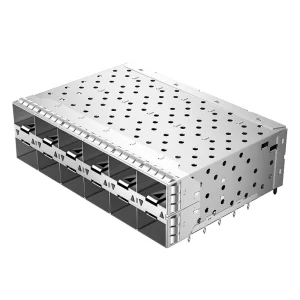
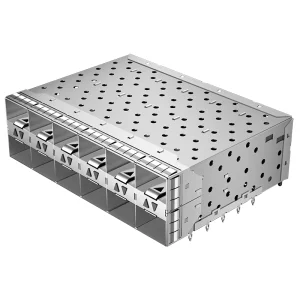
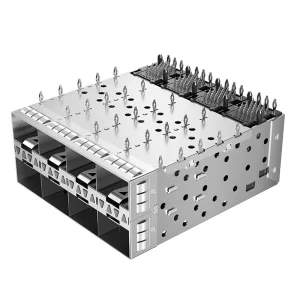
Paris has consolidated its status as one of the premier Tier-1 data center markets in Europe (FLAP-D: Frankfurt, London, Amsterdam, Paris, Dublin). Driven by the rapid proliferation of high-performance cloud architectures, generative AI training models, and the legacy digitisation demands of major financial institutions around the Paris Stock Exchange (Euronext), local data centers are facing unprecedented pressure to optimize physical space. Real estate in the Île-de-France region is at a premium, compelling engineering teams to demand maximum bandwidth density per rack unit (RU).
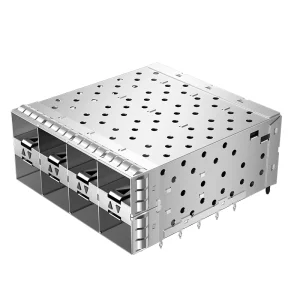
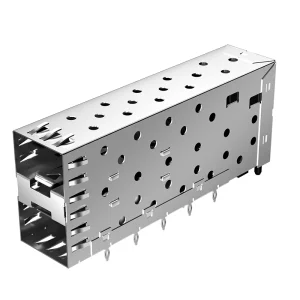
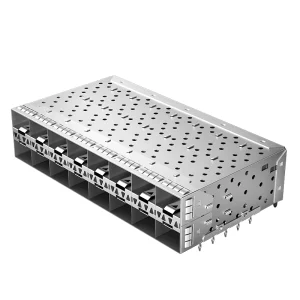
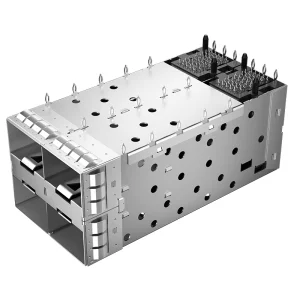
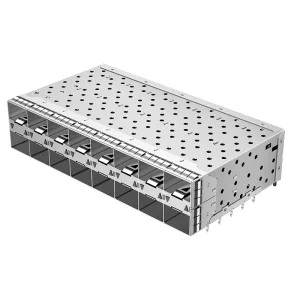
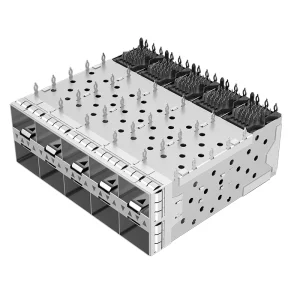
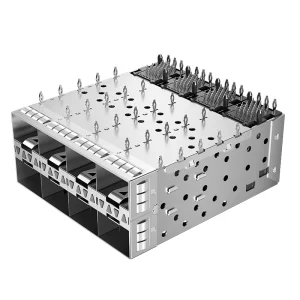
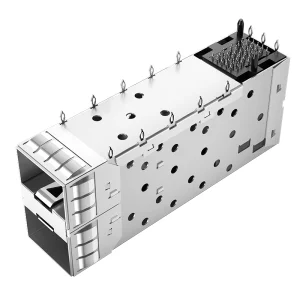
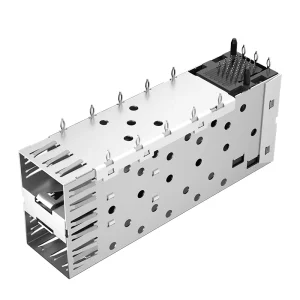
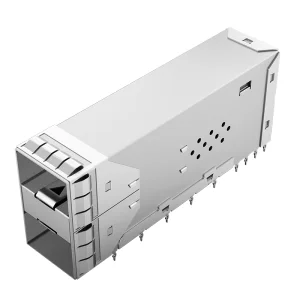
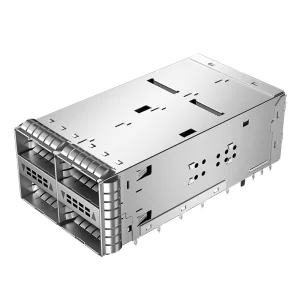
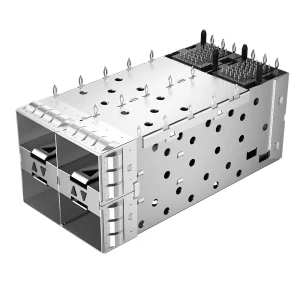
Our 2xN (Stacked Ports) connector cages are strategically engineered to address this critical architectural bottleneck. By stacking two rows of transceivers vertically (configurations like 2x1, 2x2, 2x4, 2x6, and 2x8), network hardware designers can double the port capacity on a single PCB line-card compared to single-row configurations. This transition is vital for French telecom operators and hosting providers expanding their footprint in Aubervilliers, Saint-Denis, and La Défense.
Stacked configurations demand meticulous structural calculations to maintain high data rates without signal degradation. Below is an engineering overview of our stacked SFP+/SFP28 design metrics:
| Parameter | Metric |
|---|---|
| Max Data Rate per Port | 28 Gbps (SFP28) / 56 Gbps PAM4 |
| Contact Resistance | ≤ 35 mΩ (Max initial) |
| Durability (Mating Cycles) | Min. 100 Cycles |
| EMI Spring Material | Beryllium Copper / Stainless Steel |
| Compliant Pin Retention Force | ≥ 2.2N per pin |
When stacking SFP+, SFP28, or zQSFP+ transceivers, engineering departments face two major structural hazards: Electromagnetic Interference (EMI) leakage and thermal dissipation. With ports positioned in close proximity, the risk of high-frequency cross-talk increases exponentially. Additionally, the lower-row transceivers tend to trap rising thermal radiation from the PCB, leading to overheating and optical signal drift.
Our factory resolves these obstacles through advanced mechanical innovations:
Procurement teams from global system integrators mandate rigorous standards before approving connector suppliers. By deploying our stacked ports, French equipment makers benefit from:
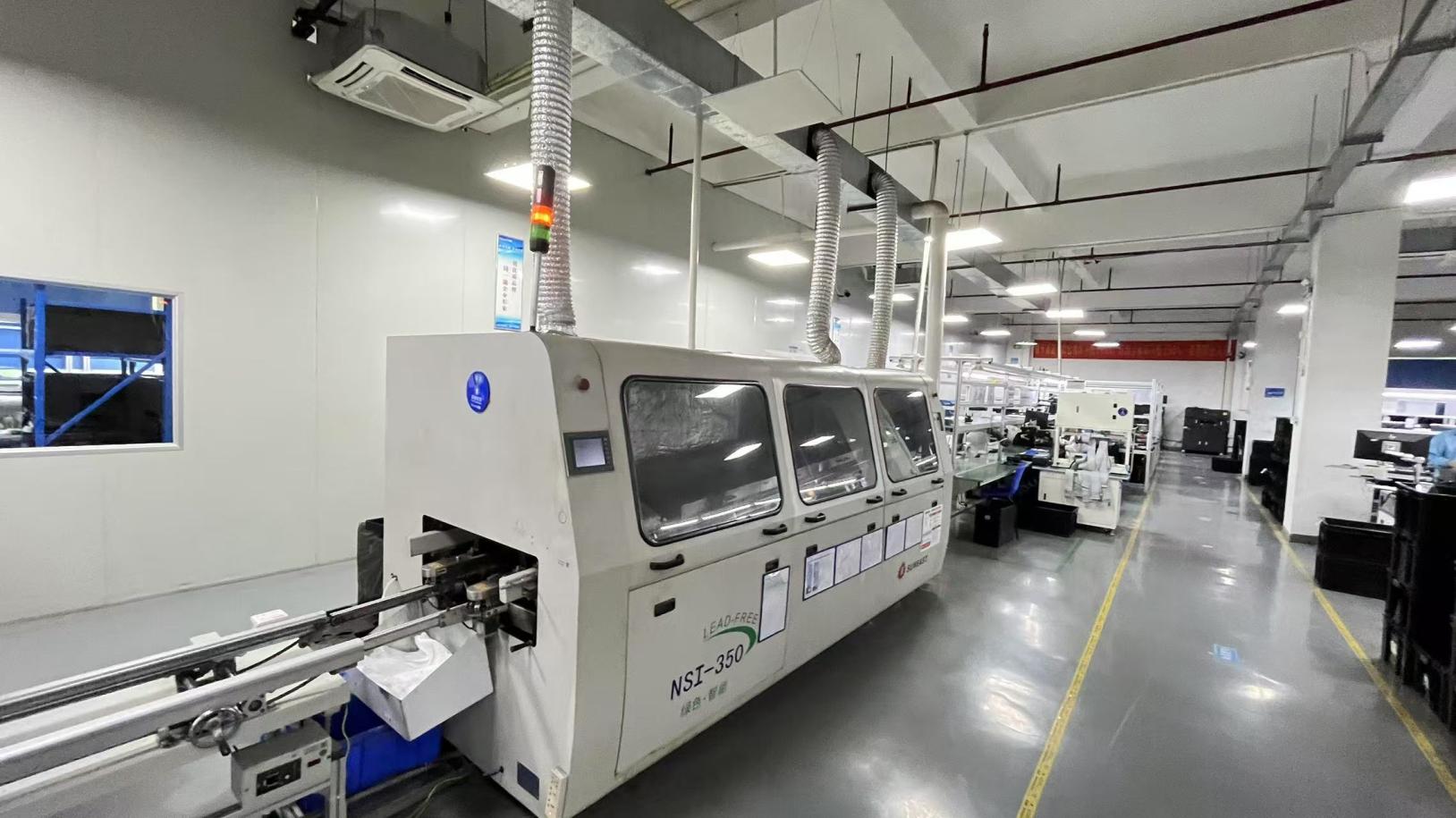
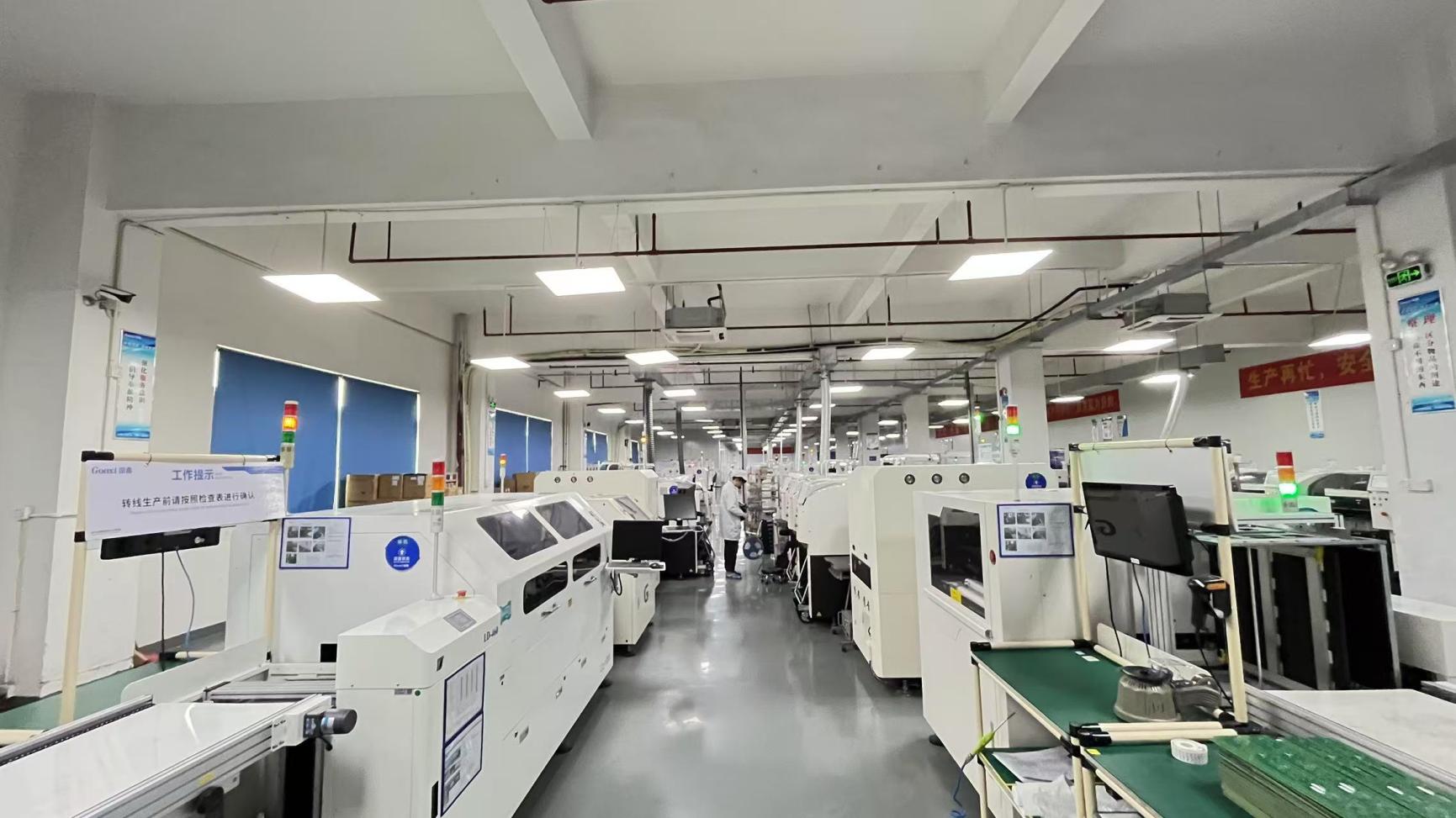
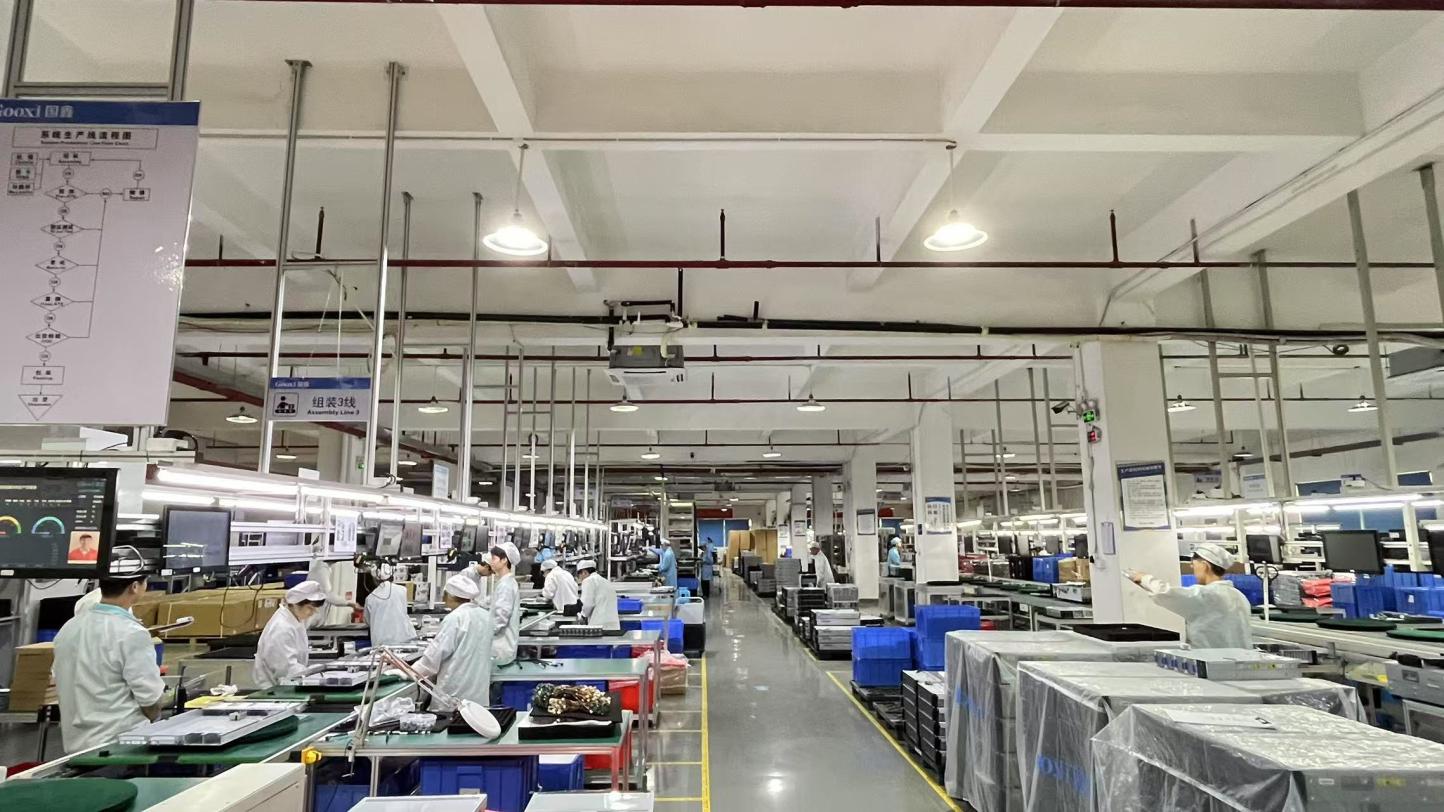
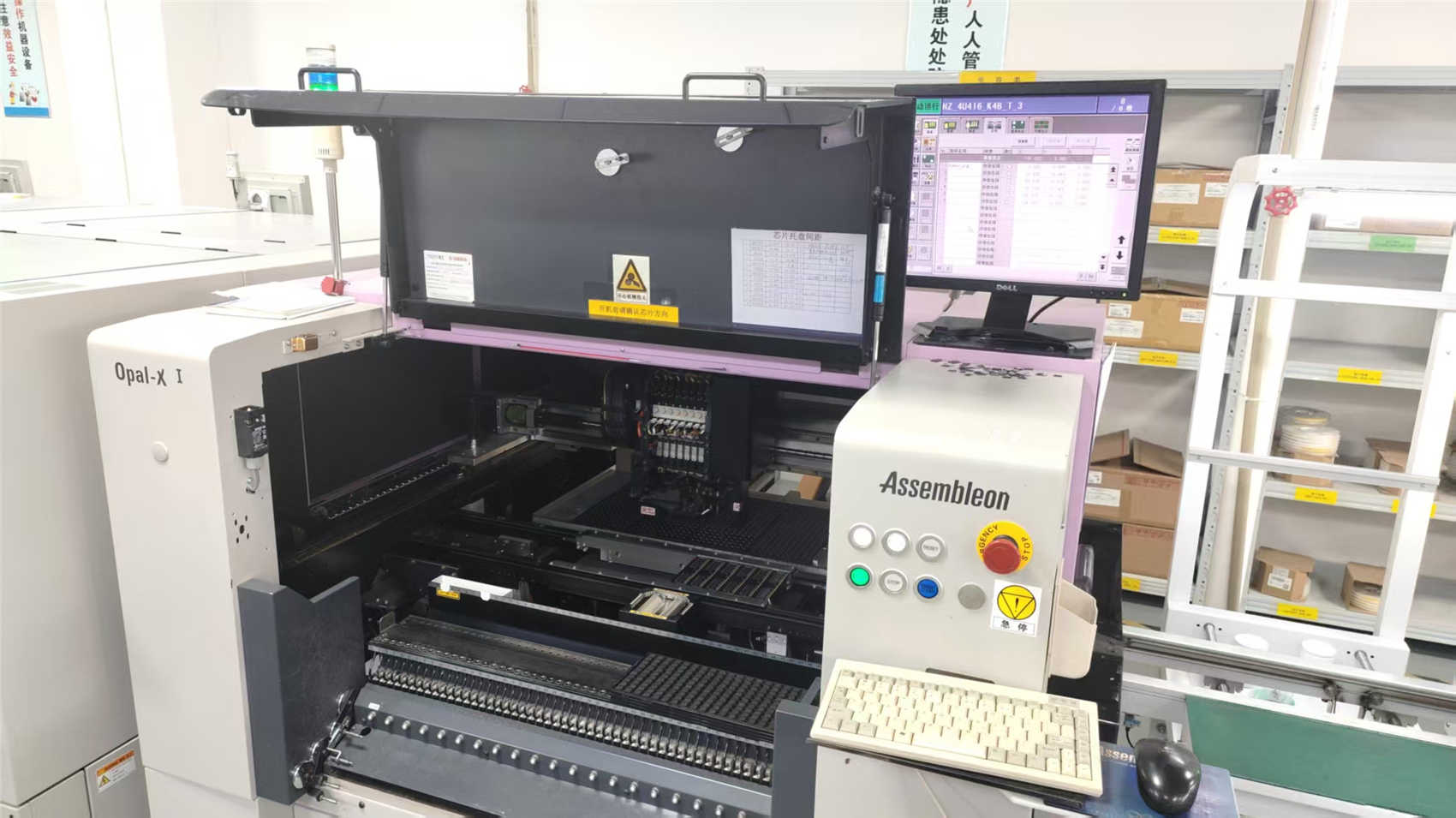
Partnering with Zyqora Optical Technologies Co., Ltd. gives French enterprises direct access to China’s advanced hardware manufacturing ecosystem. Centered in high-precision electronic hubs, our production facilities employ high-speed progressive die tooling, fully automated press-fit assembly lines, and 3D optical coplanarity scanners. This combination ensures every single contact pin meets critical geometric alignment parameters down to the micron level.
By leveraging our specialized supply network of over 860 partners, we achieve supply security and raw material cost optimization that domestic European suppliers cannot match. Our design cycles are highly agile—enabling us to develop custom ODM prototypes and launch up to 168 new high-speed networking solutions annually.
As French telecom infrastructure evolves towards next-generation speeds, several local architectures require high-quality stacked port deployment:
Critical technical, mechanical, and logistical questions answered by Zyqora's hardware engineering leads.
Stacked ports can trap warm air, particularly in the lower row adjacent to the PCB. Zyqora mitigates this by engineering specialized ventilation holes in the inner and outer metal cage shells, allowing ambient airflow to circulate. Furthermore, we design integrated heat-sink blocks (both finned and pin-fin patterns) made of high-conductivity aluminum or copper alloys, which contact the transceivers directly. Integrated lightpipe channels also function as secondary airflow vents, optimizing thermal management in high-density network switches.
Yes. All Zyqora stacked cages (e.g., 2x1, 2x2, 2x4, 2x6, and 2x8 configurations) are designed in strict accordance with the multi-source agreements (MSAs) governing SFP, SFP+, SFP28, and QSFP formats. Our tooling engineers utilize exact physical replacement footprints of leading manufacturers like TE Connectivity and Molex. This allows French network hardware developers to swap components directly onto their PCBs without needing redesigns.
Press-fit technology offers major mechanical and electrical advantages. First, it eliminates the thermal stresses of wave soldering, which can warp thin FR-4 multilayer PCBs. Second, compliant pins provide a secure gas-tight connection inside the through-hole, ensuring consistent electrical contact with low contact resistance (≤35mΩ). Third, it simplifies field repairs; damaged cages can be desoldered and replaced using simple extraction tooling without damaging adjacent components.
We employ dual EMI suppression strategies. The cage housing uses high-grade stainless steel or nickel-plated copper alloys to block electromagnetic waves. At the bezel interface (where the cage meets the front panel), we deploy either beryllium copper (BeCu) contact spring-fingers or highly conductive elastomeric gaskets. BeCu springs retain their elasticity over hundreds of cycles, ensuring a ground path to the chassis and reducing EMI emissions to meet strict CE and FCC limits.
Absolutely. We offer complete OEM and ODM services. Depending on your front panel layout and LED positioning on the PCB, we can adjust the physical path of the integrated lightpipes (e.g., top-mount, bottom-mount, or custom configurations). Last year alone, Zyqora introduced 168 new product variations, demonstrating our capability to rapidly customize layouts for global network hardware providers.
During production, we pass every single connector assembly through a 3D optical projection system that checks the alignment, spacing, and coplanarity of each compliant pin. The coplanarity is maintained within strict tolerances (typically ≤ 0.10 mm). This ensures that during insertion, all pins enter their respective PCB through-holes simultaneously, avoiding pin buckling or damage to the plated holes.
All Zyqora optical interconnect and cage assemblies comply with European safety and environmental standards. Our materials are fully RoHS and REACH compliant, confirming they are free of hazardous substances. Mechanically, they meet the IEC-60603-7 interconnect standard. Electrically, they are designed to support systems meeting EN 55032 and EN 55035 EMI/EMC compliance requirements.
Standard product orders are fulfilled from our main factory inventory and shipped via fast air freight (DHL, FedEx, or UPS) directly to Paris Charles de Gaulle (CDG) airport, typically arriving within 5 to 7 business days. For customized ODM/OEM productions, our R&D and tooling teams complete design approval within 2 to 3 weeks, followed by sample production and container or cargo shipment depending on the project volume.
Explore our full line of compatible interconnect modules for SFP, SFP+, SFP28, and QSFP+ transceivers.
Founded in 2016, Zyqora Optical Technologies Co., Ltd. is a professional manufacturer and supplier of high-performance optical transceivers and fiber connectivity solutions for global data center, telecom, enterprise network, and cloud computing applications.
With a modern production facility covering 386 square meters, Zyqora specializes in the design, development, manufacturing, and testing of optical communication products, including SFP, SFP+, SFP28, QSFP28, QSFP-DD, OSFP, AOC, and DAC solutions. Our products are engineered to deliver reliable performance, scalability, and seamless compatibility with mainstream networking platforms.
Over the years, Zyqora has established a strong international presence, achieving annual export revenue exceeding USD 18 million. Backed by 8 years of export experience and 10 years of industry expertise, we serve customers across North America, Europe, Southeast Asia, the Middle East, and Latin America.
Quality is at the core of everything we do. Our manufacturing process is supported by comprehensive quality assurance procedures, including incoming material inspection, optical performance testing, aging tests, compatibility verification, and final product inspection. A dedicated team of 42 quality control professionals ensures that every product meets international standards and customer expectations.
As a company with both manufacturing and international trading capabilities, Zyqora has built a reliable supply network with more than 860 supply chain partners, enabling efficient sourcing, stable production, and flexible delivery schedules.
Our R&D department consists of 65 experienced engineers specializing in optical communication technologies, high-speed transmission systems, and network interoperability solutions. Through continuous innovation and strict quality management, Zyqora remains committed to providing cost-effective, reliable, and future-ready optical networking products for customers around the world.