Zyqora Zyqora

China Best LC Connector Transceiver Manufacturer?

Time:2026-10-16 Author:Ethan
0%

Choosing the best China LC connector transceiver manufacturer requires more than comparing catalog prices. It requires evidence from design, production, testing, and customer support. A reliable supplier should explain connector alignment, optical budgets, operating temperatures, and compatibility with existing network equipment. These details matter when an LC connector transceiver operates inside a crowded data center rack.

Look for manufacturers with practical experience in fiber optic communication. Their engineers should understand single-mode and multimode applications, common wavelengths, and different transmission distances. Ask for test reports, product samples, and clear quality-control records. Factory audits can reveal useful details, such as clean assembly areas, calibrated optical power meters, and labeled production batches. Traceable components also make future troubleshooting faster.

No supplier is perfect. A polished website is not proof. Even experienced manufacturers may need to improve documentation or delivery consistency. The strongest candidates acknowledge these weaknesses and show corrective actions. They should provide realistic performance data instead of vague claims about being the “best.” Independent testing, recognized certifications, and responsive technical communication add valuable confidence.

This guide examines how to evaluate China-based transceiver suppliers through measurable criteria. It considers optical performance, connector quality, firmware compatibility, customization, lead times, and after-sales service. The goal is practical. Buyers should select a manufacturer that performs consistently, communicates clearly, and supports the product beyond the initial shipment. That standard protects network reliability and long-term operating costs.
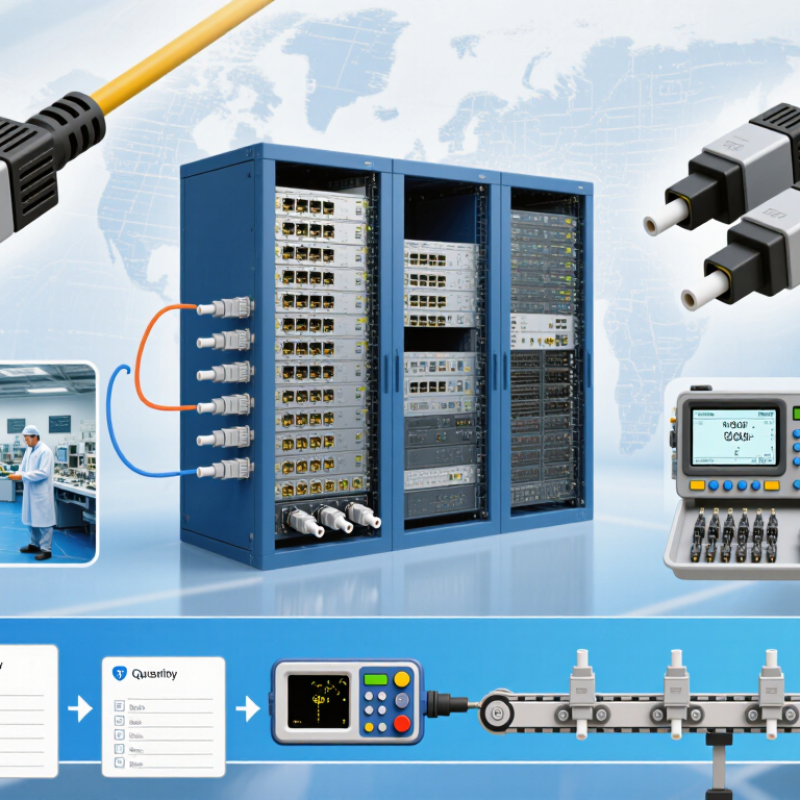
China Best LC Connector Transceiver Manufacturer?

What Is an LC Connector Transceiver?

What Is an LC Connector Transceiver?

An LC connector transceiver is a compact optical device that sends and receives data through fiber. “LC” refers to the Lucent Connector, a small push-pull connector with a 1.25 mm ferrule. Its narrow design supports high-density panels and switches. Many LC transceivers use two fiber strands. One carries outgoing signals, while the other receives incoming signals. Some versions use one strand through bidirectional transmission, but compatibility must be checked carefully.

The transceiver converts electrical signals into optical pulses and converts received light back into data. Common specifications include transmission speed, wavelength, fiber type, reach, and operating temperature. During network installations, technicians should inspect the connector face before insertion. Dust can weaken the signal noticeably. A clean click does not prove a good link. I have seen short connections fail because the optical budget was ignored. That detail is easy to miss. It is also worth checking the host device, coding requirements, and duplex polarity before ordering. Specifications can look correct and still conflict.

Tips: Match the transceiver with the fiber core, wavelength, and required distance. Keep protective caps on unused LC ports. Avoid touching the ferrule end. Record test results after installation, because memory becomes unreliable during large deployments. Manufacturer quality matters, but documented testing and traceable specifications matter more.

How LC Connector Transceivers Work in Fiber Networks

China Best LC Connector Transceiver Manufacturer?

How LC Connector Transceivers Work in Fiber Networks

An LC connector transceiver links network equipment with a fiber cable through a compact duplex interface. Inside the module, an electrical signal reaches the transmitter circuit. A laser or VCSEL then converts that signal into light. The light travels through the fiber core at a selected wavelength. At the receiving end, a photodiode detects the optical signal. A transimpedance amplifier changes it back into usable electrical data.

The two LC ports usually handle separate directions. One port transmits, while the other receives. Correct polarity is essential. A reversed pair can leave a healthy link completely dark. That detail matters. Technicians should match fiber type, wavelength, speed, and transmission distance before installation. They should also inspect end faces with a fiber microscope. Tiny dust particles can increase insertion loss and create unstable links.

In practical network work, temperature and connector quality affect performance over time. Digital optical monitoring can report power, voltage, temperature, and laser conditions. These readings help identify weak links before a total outage occurs. A dependable manufacturer should verify optical power, receiver sensitivity, return loss, and compatibility during production. However, specifications alone are not enough. Field conditions are less tidy than test benches. Cable bends, imperfect cleaning, and crowded racks can change results. Installation records and repeated testing remain necessary, even when the first link appears normal.

Key Standards and Specifications for LC Transceivers

China Best LC Connector Transceiver Manufacturer?

Key Standards and Specifications for LC Transceivers

Selecting an LC transceiver requires more than checking connector size. The optical module should match the network’s data rate, wavelength, fiber type, and transmission distance. Common Ethernet requirements reference IEEE 802.3 specifications. Mechanical compatibility often follows multi-source agreements and IEC 61754-20 for LC interfaces. These references reduce installation errors. They do not guarantee perfect system performance.

Check the module’s transmitter power, receiver sensitivity, maximum reach, insertion loss, and return loss. A 1310 nm module for single-mode fiber cannot replace a 850 nm module designed for multimode fiber. The interface may fit physically, yet the optical path can still fail.

Small details matter. Digital diagnostic monitoring should follow SFF-8472 or SFF-8636, depending on the module type. It can report temperature, voltage, bias current, and optical power during operation.

Operating temperature also deserves attention, especially inside outdoor cabinets or crowded data rooms. Field checks often reveal that a clean LC end face matters as much as the printed specification. Dust is easy to overlook. Datasheets can also be unclear about measured reach, so test conditions should be requested. A reliable manufacturer should provide traceable test records, compatibility guidance, and consistent inspection results. Even then, reviewing the complete link budget remains necessary.

How to Evaluate Chinese LC Transceiver Manufacturers

How to Evaluate Chinese LC Transceiver Manufacturers

When evaluating a Chinese LC transceiver manufacturer, begin with evidence rather than attractive product pages. Ask for complete datasheets, optical budgets, operating temperatures, and compliance documents. Verify whether the listed performance matches your network requirements. A serious supplier should explain connector insertion loss, return loss, transmission distance, and bit error rate clearly. Traceability matters.

Request samples from the same production line used for regular orders. Test them with your own switches, fiber panels, and optical power meters. Check link stability during temperature cycling and repeated connector insertion. Inspect the LC housing, latch strength, labeling, and protective packaging. Small details reveal process discipline. A perfect sample proves little without test records and batch consistency.

Commercial reliability deserves equal attention. Review lead times, minimum order quantities, warranty terms, and replacement procedures in writing. Ask how faults are investigated and how corrective actions are recorded. Factory photos are useful, but an audited production visit provides stronger evidence. I have found that fast replies can hide weak engineering support. That deserves caution. Early samples may also perform well while later batches vary. Therefore, keep acceptance standards, inspection points, and communication records clear before placing volume orders.

Applications and Quality Factors of LC Transceiver Products

LC transceivers support high-density links in data centers, telecom rooms, and enterprise networks. Their compact LC interface saves rack space and simplifies cable routing. Common applications include 1G, 10G, 25G, and higher-speed Ethernet connections. Single-mode versions suit long-distance links, while multimode versions fit shorter indoor connections. Industrial cabinets may need wider temperature tolerance and stronger protection. Use cases vary. Distance, wavelength, fiber type, and switch compatibility must match before installation.

Reliable quality begins with stable optical performance, accurate coding, and consistent manufacturing control. Check transmit power, receiver sensitivity, insertion loss, return loss, and bit error performance. Connector cleanliness also matters. One small dust particle can weaken a high-speed link. Field inspections often reveal poor polishing, loose housings, or unclear labels. A transceiver may pass a basic test and still fail under heat. That is easy to miss. Not every low-cost unit is poor, and not every premium unit is perfect. Careful verification remains necessary.

Tips: Confirm the transceiver’s speed, wavelength, fiber mode, and operating temperature. Review digital monitoring data when available. Test sample units under real cable lengths and expected temperatures. Clean LC connectors before connection. Keep test records for future troubleshooting. Compatibility lists help, but they should not replace actual testing.

China Best LC Connector Transceiver Manufacturer? Applications and Quality Factors of LC Transceiver Products

Typical maximum reach of commonly deployed LC-interface optical transceiver applications. Actual distance depends on fiber type, link budget, connector loss, and installation quality.

Quality evaluation should consider insertion loss, return loss, optical power stability, wavelength accuracy, thermal performance, digital diagnostics, and compliance with applicable IEEE and IEC requirements. The reach values shown are representative maximum distances defined for common Ethernet optical applications using compatible fiber and link conditions.

FAQS

What does an LC connector transceiver do?

It converts electrical data into light for fiber transmission. A laser or VCSEL sends the light. A photodiode converts received light back into electrical data.

Why does an LC transceiver have two ports?

One port transmits data, while the other receives it. The ports support separate directions. Reversed polarity can leave the link completely dark.

Which specifications must match before installation?

Check speed, wavelength, fiber type, transmission distance, and equipment compatibility. A 1310 nm single-mode module cannot replace an 850 nm multimode module. Physical fit does not guarantee optical operation.

How does fiber cleanliness affect performance?

Dust on an LC end face can increase insertion loss. It may also create unstable connections. Clean both ends before connection. Dust matters.

What performance values should technicians inspect?

Review transmit power, receiver sensitivity, insertion loss, return loss, and bit error performance. These values help confirm the link budget. One reading is not enough.

What information can digital monitoring provide?

Digital monitoring can report temperature, voltage, bias current, and optical power. These readings may reveal a weak link early. However, monitoring data can also be incomplete.

Where are LC transceivers commonly used?

They support dense links in data centers, telecom rooms, and enterprise networks. Their compact connectors save rack space. Single-mode versions suit longer distances. Multimode versions fit shorter indoor links.

How should LC transceivers be tested in real conditions?

Test sample units with expected cable lengths and operating temperatures. Check crowded racks, cable bends, and outdoor cabinets when relevant. Keep installation records. A first successful test may still miss later heat-related failures.

Conclusion

An LC connector transceiver is a compact optical networking component that converts electrical signals into optical signals and back again through an LC fiber interface. This article explains how it operates in fiber networks, including data transmission, wavelength selection, and compatibility with single-mode or multimode fiber. It also reviews important standards and specifications, such as transmission speed, operating distance, wavelength, optical power, sensitivity, temperature range, and digital monitoring capabilities.

For organizations evaluating Chinese LC transceiver manufacturers, product consistency, testing procedures, technical support, customization options, production capacity, and compliance with recognized industry standards are important considerations. The article also introduces common applications in data centers, enterprise networks, telecommunications, security systems, and industrial communication environments. By comparing quality control, performance stability, packaging, and after-sales service, buyers can select an LC connector transceiver that matches their network requirements and provides dependable long-term operation.

Ethan

Ethan

Ethan is a seasoned marketing professional with a deep expertise in our company's innovative product line. With a passion for sharing knowledge and insights, he takes the lead in regularly updating our corporate blog, where he explores industry trends, product features, and effective marketing......